Every few weeks another imaging AI product clears the FDA. Most announcements stay in vendor blogs and trade press. Physicians who want advisory or consulting work rarely get a practical reading of what changes for them.
NeuroDR is a useful example. It shows how routine CTA workflows are being automated, how fast some teams move through 510(k), and why clinical advisors who still work in reading rooms matter after the label is printed.
What happened
On 27 October 2026, Deep Reasoning AI announced U.S. FDA 510(k) clearance (K262134) for NeuroDR, AI-enabled software that visualises the arteries of the head and neck from CT angiography scans. NeuroNews International covered the clearance on 28 October, drawing on the company press release.
Deep Reasoning AI was founded by Cornell University AI professors. NeuroDR was developed with 3DR Labs, which ran the performance studies. Innolitics designed the studies, prepared the submission and managed the FDA review. Innolitics said the fully automated neurovascular device cleared 105 days after submission.
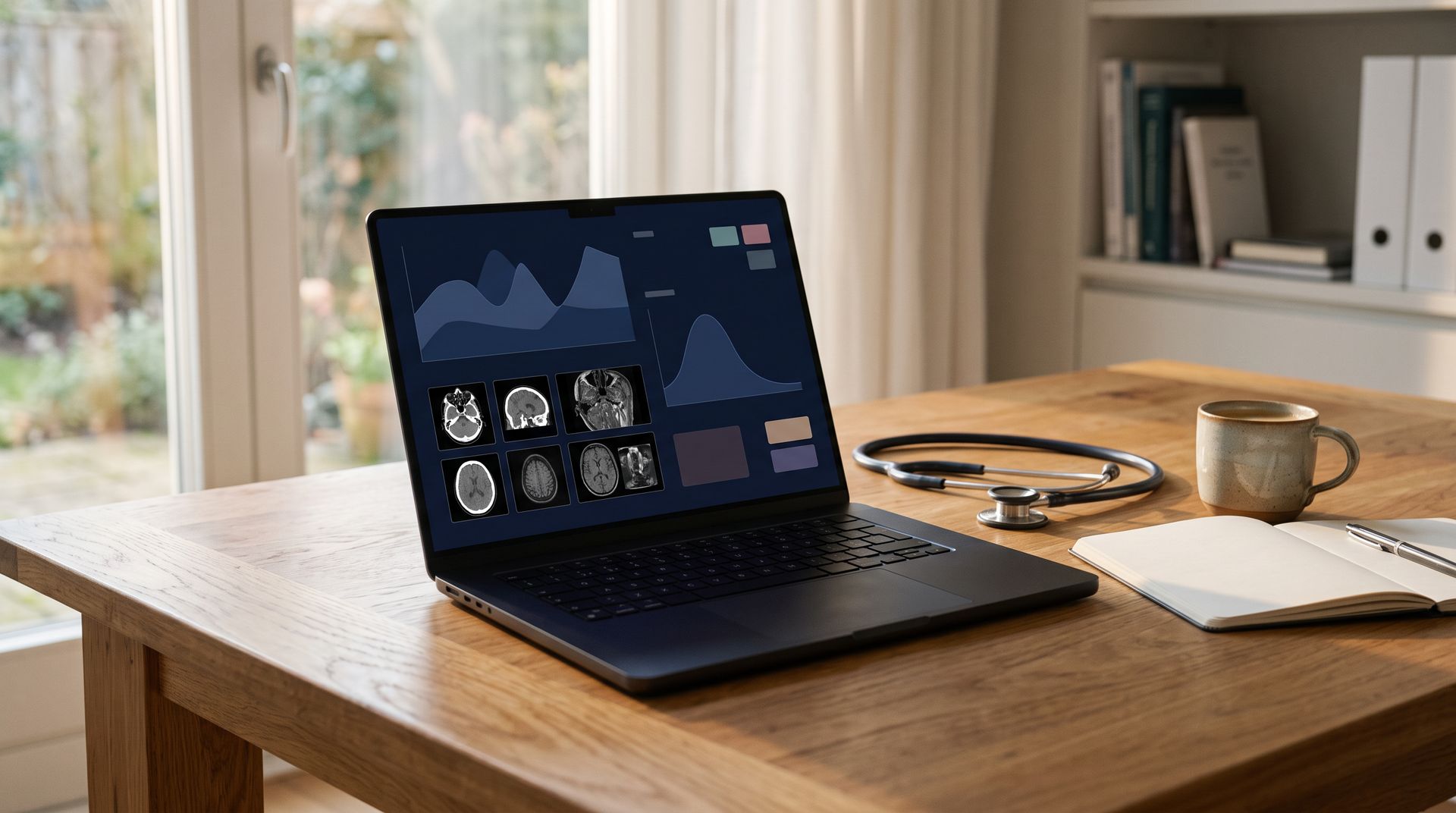
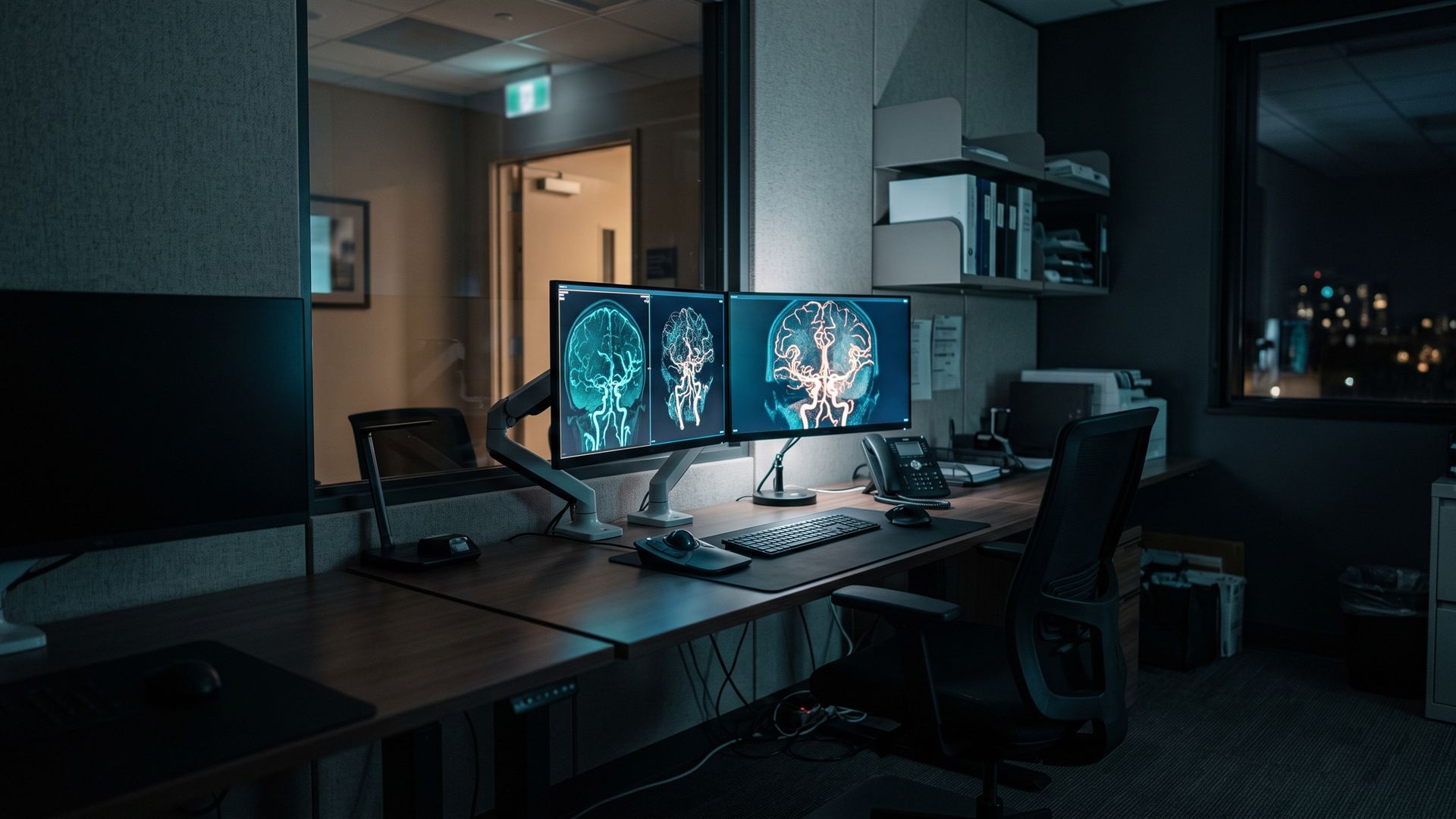
According to the company, NeuroDR runs in the background once a scan is complete. It removes bone, soft tissue and veins, then returns 3D maximum intensity projections, volume renderings and curved planar reformats of the left and right internal carotid and vertebral arteries to the hospital PACS as DICOM images. It also separates anterior and posterior circulation so overlapping anatomy is less of a problem during review.
Deep Reasoning AI says the software supports clinicians in confirming physician-identified lesions and in evaluation, documentation, follow-up and treatment planning. CEO Mike Beck called it the firm's first FDA-cleared product and a step toward patient-specific 3D anatomy from routine scans. The company and 3DR Labs plan to bring NeuroDR to U.S. hospitals and imaging centres.
Treat those clinical-utility statements as company claims, not independent outcomes research. Clearance number K262134 is on the FDA 510(k) database (decision date 7 October 2026). Company announcement: Business Wire, 27 October 2026. Trade coverage: NeuroNews International, 28 October 2026.
What this means for physicians
A 510(k) is not a hiring spree. It is the point where a company must sell into hospitals, defend workflow claims, train users and answer awkward questions from radiology chairs and stroke programme leads. That is when a healthtech advisory board starts to earn its keep.
Radiologists and neurologists who already live in CTA and neurovascular decisions are the people these teams need for workflow honesty, safety framing relative to the label, PACS and reading-room readiness, and governance language when a health system buys another neurovascular tool.
If you want physician consulting work in imaging AI, a generic "interested in AI" line on LinkedIn will not do it. You need a short, specific trail: writing about CTA or stroke pathways, talks you have given, adoption advice that did not turn you into a salesperson. Companies buy reduced risk. Specific judgement about a named problem is easier to retain than seniority alone.That is the argument in What companies actually pay physicians for
Clearances like this also change board conversations. Clinical directors get asked whether the AI stack is coherent, whether stroke pathways still have a human accountable for the read, and whether vendor claims were stress-tested by people who take call. Physicians who can hold that room without jargon become easier to appoint.See Board routes for clinicians
Who this is most relevant for
Neuroradiologists and diagnostic radiologists who read a lot of head-and-neck CTA. Stroke neurologists and neurointerventionalists who care how images reach the decision. Physicians already advising imaging or AI startups. Clinicians early in commercial work who want a concrete specialty lane rather than a vague healthtech label.
Less relevant if your goal is patient marketing, follower growth, or a general interest in AI with no imaging or cerebrovascular practice behind it. Known Doctors is built for advisory, board, speaking and paid industry work, not for building a consumer audience.
What to do this week
Write one short public note on a single CTA or stroke-pathway friction you see weekly. Name the decision, not the product. Keep patient detail out;follow Being visible without breaching anything
Update your profile so a founder searching for a CTA or neurovascular imaging advisor can see the match in one scroll. Specialty, setting and the problem you de-risk should sit above the training list.
If you already advise in this lane, send two founders a calm note that you have a view on post-clearance adoption. Ask for twenty minutes. If you want help packaging that into a retainable offer, start with a Power Hour power hour or book Meet.
Broader frame: Moving into health technology without starting over.More on the blog index
Next step for physicians
If you want a public record that makes advisory, board and speaking invitations easier to earn, start with a Power Hour (60 minutes + 90-day plan) or book a short Meet conversation.Power Hour· Meet